Damaged Skin Barrier? How to Strengthen, Protect, and Renew Your Skin Barrier
Until a few years ago, we knew surprisingly little about the skin barrier and skin barrier repair. In our quest for glass skin, we overloaded on actives – only to end up with sensitivity instead. That’s when the spotlight shifted to skin barrier repair. Dermatologists began advising us on how to repair the skin barrier, and brands were amplifying skin barrier repair products formulated with skin barrier repair ingredients. But what exactly is the skin barrier? Simply put, it’s your skin’s invisible shield, protecting it from pollution, harsh exfoliants, and other stressors. And if you’re looking for expert-led ways to restore and strengthen it, you’ve come to the right place.
What is the Skin Barrier?
The skin barrier is your body’s frontline defense, locking in moisture and keeping irritants out. But when this shield gets compromised, the effects show up fast: dryness, redness, breakouts, and more. In this guide, we’ll explain what the skin barrier really is, how to know when it’s damaged, and—most importantly—how to rebuild it naturally through lifestyle changes and proper skincare.
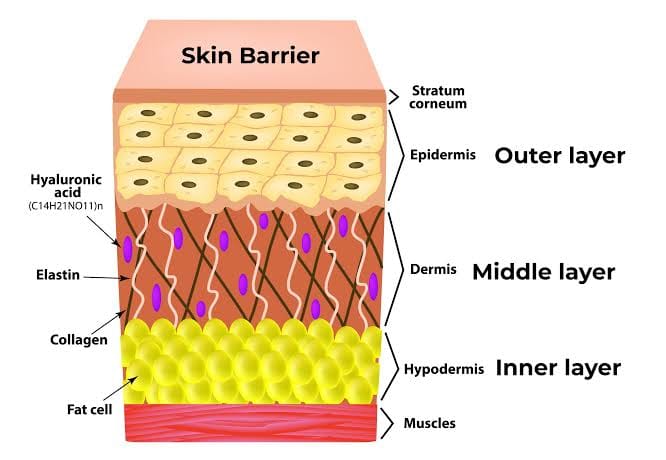
The skin barrier is part of the stratum corneum (SC), the top layer of your skin. It’s called a barrier for a reason: when functioning properly, it acts like a security gate—keeping essential moisture in and harmful irritants out. The skin barrier operates on two levels: structurally and chemically. Structurally, a tightly packed matrix of lipids and proteins forms a physical shield. Chemically, good bacteria (your skin’s microbiome) and a slightly acidic pH (known as the acid mantle) help defend against pathogens and maintain a healthy balance. When it is healthy, skin feels soft and hydrated; when damaged, it becomes irritated.
Signs of Skin Barrier Damage
Not sure if your skin barrier’s in trouble? Look out for these telltale signs of a damaged or broken skin barrier:
• Stubborn flakiness. – When the barrier is compromised, dead skin cells don’t shed properly. Dead, keratinized cells accumulate unevenly on the surface instead of shedding cleanly.
• Persistent redness – A compromised barrier allows low-level irritants (including cleansing products), pollutants, and allergens to penetrate deep into the epidermis. This triggers a continuous, low-grade inflammatory cascade.
• Dull complexion. – The buildup of dead skin cells forms a literal gray or ashen veil over the skin, trapping light rather than reflecting it.
• Shiny, dehydrated skin. – A damaged barrier overproduces oil to compensate for lost moisture, making your skin appear oily but feel dry.
• Tight-feeling skin after cleansing – If your skin feels tight after cleansing, it’s lost essential oils and moisture, signaling skin barrier repair.
• Stinging feeling after using skincare products. – When the barrier is damaged, moisture escapes, and irritants have the ability to creep in, leading to stinging from products that are used to soothe.
• Frequent breakouts. – Research shows that a compromised skin barrier can disrupt: the skin’s microbiome (leading to clogged pores), hydration levels and trigger inflammation, making skin more prone to breakouts.
• Accelerated signs of aging – Including exaggerated fine lines, wrinkles, and dark spots.
• Rough and uneven – Dehydrated skin cells deflate and shrivel. Instead of a smooth, plump surface that bounces light back uniformly, the surface becomes rough and uneven.
In short, if your glow is gone, your skin barrier is begging for some TLC.
How Does the Skin Barrier Get Damaged or Broken?
Occasional dryness or redness might seem minor, but repeated stress on the skin barrier can lead to long-term damage. One of the main culprits? Overusing harsh products, like stripping cleansers or potent actives, that break down the skin’s defenses. UV exposure, low humidity, and even psychological stress can also disrupt the lipid matrix and protein structure within the stratum corneum. As these structures weaken, skin loses its ability to retain moisture and block out irritants.
Why Should You Care?
Because when your skin barrier is healthy, your skin literally reflects it. When your skin barrier is healthy, the outermost layer—the stratum corneum—acts like a smooth, highly organized mirror. It reflects light evenly, which creates that natural “glow.” When that barrier is compromised, that mirror shatters.
A strong barrier keeps moisture in, fends off irritants, and helps skin look smooth, soft, and naturally radiant. But when it’s compromised, the effects are visible: dryness, dullness, uneven texture, redness, and a tired, aged appearance. In short, if your barrier is struggling, your glow goes with it.
How Can You Repair Your Skin Barrier?
To fix a damaged skin barrier and restore that optical “mirror” finish, you have to move past basic hydration and focus on lipid replacement and inflammation signaling.
Applying a heavy, generic moisturizer often just sits on top of dead skin cells. To actually stop Trans Epidermal Water Loss (TEWL), the topical strategy requires a precise mix of physiological lipids, cellular communicators, and film-forming humectants.
1. The Physiological Lipid Matrix (The 3:1:1 Ratio)
The intercellular cement holding your skin cells together is made up of three primary lipids: ceramides, cholesterol, and free fatty acids.
When repairing a broken barrier, the ratio of these ingredients matters more than their presence alone. Research shows that applying a dominant or equal ratio of all three—specifically a 3:1:1 molar ratio favoring ceramides—accelerates barrier recovery. Applying just one lipid (like pure cholesterol or a single fatty acid) can actually delay healing.
• Ceramides (1, 3, or EOP/NP): These act as the structural bricks. They fill the gaps between shriveled skin cells to prevent water from escaping.
• Cholesterol: This provides fluidity and elasticity to the lipid bilayer, keeping the skin supple.
• Fatty Acids (e.g., Linoleic Acid): These maintain the acidic pH of the skin barrier (the acid mantle), which is vital for the water-dependent enzymes that handle natural shedding.
2. Cellular Signaling and Barrier Enablers
Beyond manually patching the cracks with lipids, you need ingredients that instruct the skin to repair itself from within.
• Niacinamide (Vitamin B3): A powerhouse for dullness and barrier repair. It upregulates the skin’s natural synthesis of ceramides and fatty acids while simultaneously slowing down the transfer of pigment (melanin) to surface cells, tackling dullness from two distinct angles.
• Panthenol (Pro-Vitamin B5) & Centella Asiatica (Madecassoside): These function as biological brakes for micro-inflammation. By downregulating inflammatory cytokines, they stop the vascular constriction that leads to a sallow, drained complexion.
• Ursolic Acid / Phytosphingosine: These molecules trigger the differentiation of keratinocytes (skin cells), forcing the skin to build a denser, more organized stratum corneum.
3. Advanced Humectants (Moisture Anchors)
Before sealing the skin with lipids, you must rehydrate the deflated cellular structures underneath. Traditional hyaluronic acid is fine, but broken barriers benefit from molecules that mimic the skin’s Natural Natural Moisturizing Factors (NMF).
• Glycerin & Polyglutamic Acid: Glycerin penetrates deep into the aquaporin (water channels) of the skin, while polyglutamic acid forms a self-holding, elastic film on the surface that holds up to four times more moisture than hyaluronic acid, immediately smoothing out micro-roughness to improve light reflection.
• Urea or Amino Acids: At low concentrations (less than 5%), urea acts as a gentle humectant that mimics NMF, hydrating the skin enough to restart the enzymes responsible for shedding dead, gray surface cells.
The Repair Routine Structure
To avoid overloading compromised skin, keep the application sequence incredibly streamlined:
| Step | Product Type | Key Target |
| 1. Hydrate | Water-dense, fragrance-free essence or serum containing Glycerin, Panthenol, or Niacinamide. | Saturates the deflated cells and calms micro-inflammation. |
| 2. Rebuild | An emollient cream featuring a verified Ceramide/Cholesterol/Fatty Acid matrix. | Patches the lipid bilayer and locks in the hydration from step 1. |
| 3. Occlude (PM) | A lightweight balm with Squalane, Allantoin, or Shea Butter. | Form a temporary physical shield to drop TEWL to zero overnight while the skin cells regenerate. |
What to Pause: While the barrier is restoring its optical smoothness, entirely halt all direct alpha-hydroxy acids (like glycolic or lactic acid), retinoids, and mechanical scrubs. They will only disrupt the fragile lipid matrix your skin is trying to assemble.
Here are some ways to renew your skin barrier:
At Home
- Simplify your routine. In an effort to optimize our glow, we often pile on harsh ingredients that promise to exfoliate dead skin and more. But when your skin barrier is damaged, these harsh ingredients (think soap, physical exfoliators, and acids that disrupt natural pH) may be doing more harm than good. If you’re noticing signs of skin barrier distress, give your complexion a break and pare down your routine, focusing on a super gentle cleanser, nourishing moisturizer, and only fragrance-free, dye-free serums designed for sensitive skin.
- Focus on protection. UVA/UVB rays and environmental pollutants can wreak havoc on the skin barrier. Wear gentle sunscreen daily, cover up with hats and sunglasses, and avoid the outdoors when the sun is at its strongest (10 a.m. to 4 p.m.) You can also choose serums with ingredients that protect against pollutants like polyacrylate crosspolymer-6 (PAC6). This novel ingredient creates an invisible, breathable, proactive layer over the skin to shield and calm, lock in hydration, and improve the appearance of a damaged barrier by keeping moisture in and irritants out.
- Moisturize and hydrate. When your skin barrier is damaged, your skin loses water easily and gets dehydrated quickly. Moisturizers with ingredients like hyaluronic acid, glycerin, and ceramides have been shown to help support skin barrier repair. Upping your fluid intake may also help.
- Nourish from the inside out. A balanced diet supports all aspects of your health—and the skin barrier is no different. Reach for vitamin-rich options like fruits, vegetables, and whole grains. Research shows that omega-3 fatty acids (found in salmon, sardines, flaxseed, and walnuts) may be especially helpful for a strong skin barrier.
- Support your skin’s microbiome. The microbes on the surface of our skin regulate the formation of the stratum corneum, facilitating healthy skin barrier structure and function.
In-Clinic
- LED light therapy. Also known as LLLT or Red Light Therapy, this uses light at specific wavelengths to reduce inflammation, boost cellular healing, and improve microcirculation, which strengthens the barrier.
- Hydrating facials. Hydrofacials give the skin a deep cleanse. Followed by a nourishing infusion of serums, it promotes healthy skin.
- Low-energy laser treatment. Low-energy lasers strengthen the dermal structure and support barrier health.
- Mesotherapy. Mesotherapy delivers ceramides and hyaluronic acid through injectables. Direct infusion replenishes the lipids and hydration to soothe the skin.
Best Ingredient for Skin Barrier Repair
If your skin barrier could talk, it would ask for skin barrier repair products with these MVPs – the ultimate skin barrier repair ingredients for hydration, protection, and repair.
• Ceramides – Ceramides rebuild the skin’s lipid layer, locking in moisture and keeping irritants out.
• Cholesterol – Cholesterol supports the structure of lipids, and when levels drop, the barrier weakens.
• Hyaluronic Acid – It draws in moisture to plump and calm the skin to keep your barrier hydrated.
• Glycerin– Glycerin attracts and retains water, maintaining soft, supple skin.
• Squalene – Lightweight yet nourishing, this skin barrier repair ingredient locks in hydration without clogging pores.
• Panthenol – Panthenol forms a protective layer to seal in moisture and calm irritation.
How Stem Cells Can Help Your Skin Barrier
When people think of renewing the look of the skin barrier, thick moisturizers often come to mind. While these can help (more on that later), they are only one piece of the puzzle. If your goal is to actually renew the appearance of your barrier, while also tackling things like the look of dullness, dark spots, or early signs of aging, traditional solutions often fall short.
Stem Cells offer something different. These cells reprogram the appearance of skin. What makes them so unique is that they are clinically proven to correct visible signs of aging while also supporting the look of a healthy skin barrier at the same time.
Exosomes can help the skin barrier in a few different ways:
• Promote the appearance of a stronger barrier – Unlike moisturizers that simply add lipids to the skin, stem cells have been shown to support the appearance of the skin’s structure.
• Support hydration and visible resilience – When the skin barrier is compromised—due to overuse of skincare, environmental stress, or age—skin can appear dry, dull, or uneven. Stems cells have been shown to help maintain moisture balance and support the skin’s ability to retain hydration.
• Help reduce the look of redness and dryness – A compromised barrier is often associated with redness or tightness. Stem cells have been studied for their potential to calm the look of stressed skin and promote a smoother, more even appearance.
• Encourage healthy-looking texture and tone – Disruption in the skin barrier can interfere with normal skin renewal, leading to visible roughness or buildup. Stem Cells help improve the look of texture over time, without relying on harsh exfoliants that could further disrupt the barrier.
• Contribute to overall balance – Early research suggests that Stem Cells may also help maintain a balanced environment on the skin’s surface, which plays a key role in helping defend against external stressors.
Explore the first and only at-home serums, all skincare powered by Stem Cells.
How Long Does it Take to Repair a Damaged Skin Barrier?
If you’re struggling with a damaged skin barrier, you want it fixed yesterday. However, how long it takes, will depend on how severe the problem is.
• Mild damage (from over-cleansing or weather): up to 2 weeks
• Moderate damage (from harsh skincare or treatments): up to 3 months
• Severe barrier issues (from chronic conditions like eczema or acne): several months
The Bottom Line: It All Comes Back to the Skin Barrier
At the end of the day, your skin barrier is the foundation of healthy-looking, resilient skin. When it’s strong, your skin retains moisture, defends against environmental stressors, and stays even, smooth, and glowing. But when it’s compromised, even the best skincare routines can fall flat. That’s why caring about your barrier isn’t just smart, it’s essential.
Understanding how the skin barrier works, what damages it, and how to renew its appearance gives you the power to make better skin choices. With the right barrier-supportive routine, including ingredients like humectants, SPF, and next-gen solutions like platelet-derived exosomes, you’re not just masking concerns. You’re building skin that looks healthier and feels stronger.
Want to renew the appearance of your skin barrier while also correcting the look of aging skin? Schedule a Skin Analysis Consultation.
Share The Beauty… Earn Rewards!
At PLEIJ Salon+Spa, we offer a simple and easy referral program to our existing clients (and even non-clients). When you refer a friend who is new to PLEIJ, we’ll give them a 20% OFF GIFT to use towards any service. To say thanks, we’ll give you a 10% OFF GIFT to use toward services or products!
Be sure to learn everything about this awesome program and even send out referrals.