How To Get Thicker, Fuller Hair
Dealing with thin, limp or flat hair and trying to figure out how to transform it into long, thick, voluminous locks? You’re not alone: About two in five women deal with hair loss by age 50. There could be a multitude of causes, often involving a combination of genetics, age, hormonal changes, lifestyle, health conditions, physical or emotional stress or simply from poor or wrong haircare practices. Identifying the underlying cause of hair loss is the most important step and should include a consultation with a trichologist or healthcare professional, as the hair loss treatment options can vary depending on the cause.
Many of these hair loss factors can be controlled, even inflammation and genetic thinning, as long as they are evaluated for proper treatment and recovery. Symptoms of genetic thinning would be hair loss more prominent on the top of the scalp rather than the sides. Symptoms of inflammatory thinning include itching and burning as well as flaking and redness in areas of hair loss.
If you feel your hair is lacking fullness, not to worry — we have all the tips you need to bring your strands back to life. Ahead we’ll discuss how to thicken fine hair, including natural home remedies, what to eat to grow hair faster, professional treatments, products to use and more so you can start seeing thicker, fuller, longer hair.
1. Pick a Thickening Shampoo & Conditioner
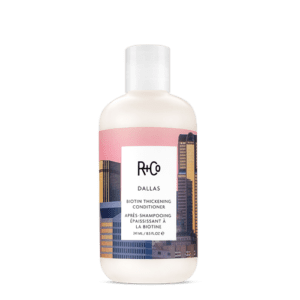
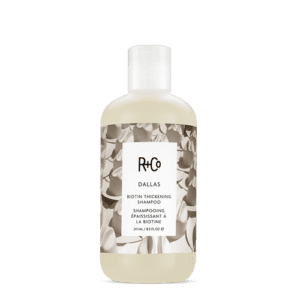
The easiest way to volumize your hair: opting for a thickening shampoo and conditioner. You’re washing your hair anyway, so it’s no extra work to use a thickening or volumizing shampoo. This is the work-with-what-you-have approach and includes using hair products and styling tools to create volume, thickness and texture.
Shampoos and conditioners labeled ‘volumizing’ or ‘thickening’ usually contain fewer conditioning ingredients, so they don’t weigh hair down. They’re a good foundation (but not a replacement) for styling products and we recommend using the matching shampoo and conditioner set for best results, as they are formulated to compliment each other and to work together.


2. Keep Your Hair & Scalp Healthy
This seems like a given, but getting great-looking hair is nearly impossible if you keep damaging it. If someone wants thicker-fuller looking hair, they should minimize the use of heat styling tools and refrain from using too much conditioner in the shower [to avoid weighing down hair]. If you still want to use your hot tools, taking precautions like using the right tools and heat protectant spray are a must. You’ll also want to avoid tight hairstyles and over-washing your hair, which will help minimize breakage and hair loss, helping it look thicker and stronger over time.
In addition to heat styling, we recommend avoiding frequent chemical treatments, as consistent use of “bleaching, perming, relaxing and dyeing can damage hair and lead to thinning.




3. Eat to Benefit Your Hair
Regularly consuming certain nutrients and foods can make a difference when it comes to growing thick, full, lush strands. Seek out lean proteins, omega-3 fatty acids, fat-soluble vitamins, B-complex vitamins and iron.
If you’re dealing with general hair thinning throughout the scalp, the typical cause is low nutrient blood levels of specific vitamins and minerals, including zinc, vitamin D3, folate, B12 and ferritin. You need to be in the optimal range of these blood levels, which is specifically in the middle or near the top of the medical range for maximum hair growth.
Top sources to support healthy hair growth include:
• Salmon
• Eggs
• Peanuts
• Spinach
• Avocado
4. Add Hair Thickening Products to Your Regimen
Starting your style with volumizing or thickening styling products can go a long way toward making your hair look fuller, faster. Here are a few to try:
- Leave-in thickening and volumizing products, like sprays, mousses, serums and gels are used on — and “left in” — damp hair to provide a bigger boost of fullness compared to shampoos and conditioners. They coat hair to make it feel thicker and give it grip to help you manipulate strands into a voluminous look. For best results, distribute the product from roots to ends to fully coat strands.
- Root lifting spray. Hair flat to the head always looks thinner than hair that is lifted at the root. You can use a root lifter to give hair bounce and volume right at the start of the hair shaft.
- Dry shampoo can also give you an instant boost of volume. Dry shampoo often contains powders like starches and minerals to increase the friction between strands and absorb oil, which creates volume. Revive limp or flat stands anytime by spritzing dry shampoo under sections of hair at the roots, then lightly brushing through.
5. Use Color to Create the Illusion of Fullness
If you’re open to coloring your hair, adding a few subtle streaks into the mix could be the right way to go. Highlighting hair adds the look of depth to strands. It gives your mane dimension, which creates the illusion of fuller locks instead of flat, single-toned hair. Talk to your stylist about the most flattering highlights for your face, or bring a photo of a style you already love to your consultation.
Prefer to skip permanent color? Keep in mind that the more of your scalp that’s visible, the thinner your hair will appear. Fill it in a bit with a powder eyeshadow in a shade close to your hair color or with a powder root touch-up to hide balding spots. Added bonus: Powder root touch-ups can also help hair look fuller and more textured.
6. Get a Strategic Cut
Though getting “longer hair” and “thicker hair” are often simultaneous goals, sometimes, getting a haircut can actually make your hair look thicker. If you have thin hair, opt for a cut that is short to medium length. Often thin or fine hair that’s very long can look stringy and even thinner since it’s weighed down by the length.
- For straight hair, shorter cuts such as a blunt bob (or a long bob, a.k.a. “lob”) can up volume, making strands appear denser by snipping off straggly ends that can drag your style down.
- If you have textured hair, no matter what your length, cutting layers all over will help reduce hair’s weight, adding piecey-ness, lift and movement to both air-dried and blow-dried styles.
7. Consider a Trichologist or Dermatologist Visit
For serious thinning hair or hair loss, a session with a trichologist or dermatologist (they also specialize in hair) may be needed.
Hair that’s naturally thin in diameter [fine] or sparse is genetic. Hair loss is often hereditary (or androgenic) thinning, which tends to be patchy.
Another common type is telogen effluvium (TE), or allover shedding, due to hormones or health issues such as thyroid or autoimmune disease and anemia. With TE, hair generally grows back once the problem is treated; see a doctor for diagnosis.
While shelves are packed with vitamins and supplements claiming to stimulate hair growth, a prescription may be your best bet in certain instances. Female-patterned hair thinning is related to hormones and the sensitivity of the hair follicles to the hormone. Hormonal prescription medications such as some oral contraceptives and spironolactone can be very effective in making hair thicker.
For androgenic loss, we recommend Calecim Advanced Hair System versus over-the-counter topical minoxidil (well known in Rogaine) due to the fact it is as, if not more effective, natural, and has no adverse side effects. For all types of hair loss, PRP (platelet-rich plasma), an in-office treatment that stimulates growth with scalp injections of your blood’s growth factors. You can also implement low-level laser therapy (red light therapy), with products such as iRestore Hair Restoration Helmet.
Minoxidil, low-level laser therapy and injections like PRP improve blood flow, cellular recovery and stem cells to the area of desired treatment. Over time, this may improve hair growth and thicken hair, but if the underlying cause of the loss has not been remedied, the results will be temporary or muted.
How Long Does it Take to Get Thicker Hair?
The key to improving hair’s density is to be both consistent and multifaceted: Good nutrition, proper hair care and possibly medical treatment can lead to improvements over time.
Depending on which treatment modality is utilized, you may see results in as little as three months. In some cases, you may not see thicker hair and instead, hair would remain the same because it’s simply stopping the progression of the thinning. If you do everything correctly, you should be seeing some improvement within 90 days, remarkable improvement by nine to 12 months and typically peak or maximum recovery within 18 to 24 months.
Share The Beauty… Earn Rewards!
At PLEIJ Salon+Spa, we offer a simple and easy referral program to our existing clients (and even non-clients). When you refer a friend who is new to PLEIJ, we’ll give them a 20% OFF GIFT to use towards any service. To say thanks, we’ll give you a 10% OFF GIFT to use toward services or products!
Be sure to learn everything about this awesome program and even send out referrals.